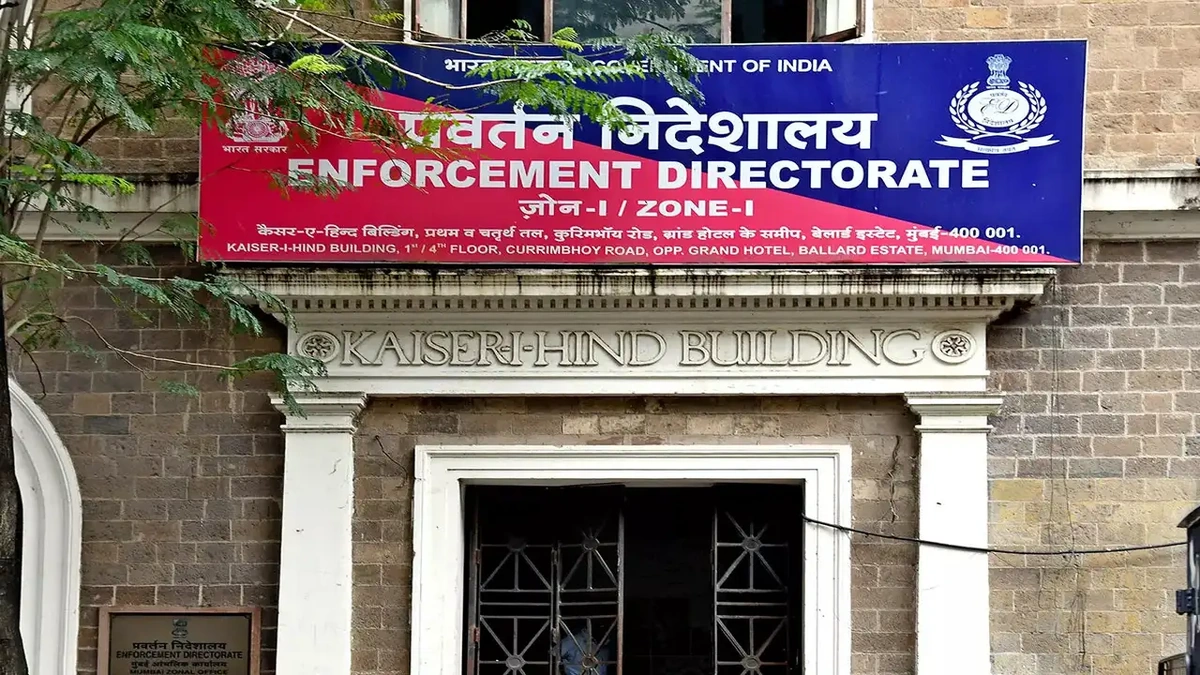
Alright, let’s talk about something that’s got everyone in the financial world buzzing – the Enforcement Directorate (ED) seizing assets worth a whopping ₹3,084 crore from the Reliance Anil Dhirubhai Ambani Group. Now, you might be thinking, “Okay, another headline. So what?” But here’s the thing: this isn’t just another news story. It’s a peek into the intricate dance between corporate power, financial regulations, and the long arm of the law. We need to ask ‘why’ this matters.
Why This Enforcement Directorate Action Matters

The immediate reaction might be to see this as just another case of financial wrongdoing. But, digging a little deeper, it reveals a bigger picture. We’re talking about potential violations under the Prevention of Money Laundering Act (PMLA). Think of the PMLA as the financial world’s immune system – it’s designed to protect the economy from the nasty effects of money laundering . When the ED steps in, it’s because they suspect that this system has been compromised.
What fascinates me is the sheer scale of the assets involved. ₹3,084 crore is not pocket change. It represents significant investments, potential revenue streams, and, of course, a whole lot of economic activity. When these assets are seized, it has ripple effects. Businesses linked to the group may face uncertainty, investors could get jittery, and the overall market sentiment might take a hit. It’s like a domino effect, and it all starts with that initial action by the ED.
The Allegations | What Did Reliance ADA Group Do?
So, what exactly is the Reliance Anil Dhirubhai Ambani Group accused of? Well, the ED alleges that the group violated provisions of the Foreign Exchange Management Act (FEMA) and Prevention of Money Laundering Act (PMLA). Allegedly, funds were siphoned off and invested in foreign assets, bypassing the regulatory framework designed to keep such transactions transparent and legitimate. More background on earlier events can be found here .
The specific details of the allegations are still unfolding, but what’s clear is that the ED believes there’s enough evidence to warrant the seizure of these assets. This isn’t a light decision; it’s a calculated move based on extensive investigation and a belief that the assets are proceeds of illegal activity. It’s a reminder that even the most powerful entities are subject to the law, and that financial accountability is paramount.
The key point is the alleged violation of FEMA. FEMA essentially governs how foreign exchange is managed in India. It sets the rules for investments, trade, and other financial transactions involving foreign currency. Think of it as the gatekeeper of India’s foreign exchange reserves. When companies allegedly flout these rules, it can disrupt the economic stability of the country.
Impact on Investors and the Market
Let’s be honest, news like this can send shivers down the spines of investors. No one wants to see their investments tied up in legal battles or, worse, completely wiped out. So, how does this ED action affect the average investor? For starters, it creates uncertainty. When a company is under investigation, its stock price can become volatile. Investors might rush to sell their shares, fearing further losses. This can lead to a downward spiral, impacting the company’s overall value.
But it’s not just about the immediate impact on stock prices. The long-term implications are equally important. If the allegations are proven true, it could damage the company’s reputation, making it harder to attract investors in the future. It could also lead to stricter regulatory scrutiny, making it more challenging for the company to operate.
According to experts, such incidents also highlight the need for stricter corporate governance. What I mean is that, companies need to have robust internal controls to prevent financial wrongdoings. They need to foster a culture of transparency and accountability, where ethical behavior is not just encouraged but enforced. After all, a company’s reputation is its most valuable asset, and it can be easily tarnished by even a whiff of scandal.
The ED’s Role and Powers
The Enforcement Directorate isn’t just some bureaucratic agency; it’s a powerful body with the authority to investigate financial crimes, seize assets, and even arrest individuals. It operates under the Ministry of Finance and plays a crucial role in combating economic offenses in India. Let’s consider the history of the body and recent crackdowns.
The ED’s powers come from various laws, including the Prevention of Money Laundering Act (PMLA) and the Foreign Exchange Management Act (FEMA). These laws give the ED the authority to conduct searches, seize documents, and freeze bank accounts if they suspect financial wrongdoing. They can also arrest individuals who are believed to be involved in money laundering or other economic offenses. It’s a formidable force, and it’s meant to be.
The ED’s actions are not without controversy. Some critics argue that the agency has become too powerful and that its investigations are sometimes politically motivated. But supporters of the ED argue that its actions are necessary to protect the integrity of the financial system and to deter economic crimes.
What Happens Next?
So, what happens now that the ED has seized these assets? Well, the investigation will continue, and the ED will likely file charges against the Reliance Anil Dhirubhai Ambani Group. The group will have the opportunity to defend itself in court, and the courts will ultimately decide whether the allegations are true. This could affect IPO valuations .
If the courts find the group guilty, the seized assets could be confiscated by the government. This money could then be used to compensate victims of the alleged financial crimes or to fund other government programs. It’s a long and complex process, and it could take years to reach a final resolution.
But regardless of the outcome, this case serves as a reminder that financial accountability is essential. It shows that even the most powerful entities are not above the law and that economic offenses will be investigated and prosecuted. It’s a message that resonates not just in India but around the world.
Frequently Asked Questions
What exactly does the Enforcement Directorate (ED) do?
The ED investigates financial crimes like money laundering and FEMA violations.
What is FEMA and why is it important?
FEMA regulates foreign exchange in India, ensuring economic stability.
What happens to the seized assets if the company is found guilty?
The government can confiscate the assets and use them for public benefit.
How does this ED action affect the average investor?
It creates uncertainty and can impact stock prices of related companies.
Is the ED’s power controversial?
Yes, some critics argue the ED is too powerful, while others defend its role in combating economic crime.
Ultimately, the ED action against Reliance Anil Dhirubhai Ambani Group is a stark reminder that in the world of finance, the stakes are always high, and the rules apply to everyone – no matter how powerful. And that’s a lesson we all need to keep in mind. The legal repercussions will likely continue for a considerable time.



Leave feedback about this